There’s something deeply personal about a smile. It’s how we greet the world, how we show joy, and how we connect with others. But for many people, even something as small as a gap between the front teeth can affect confidence for years.
This case is one of those powerful reminders that cosmetic dentistry isn’t about vanity — it’s about empowerment. Let us walk you through how one patient closed a space she’d lived with for 21 years… in under 60 minutes.

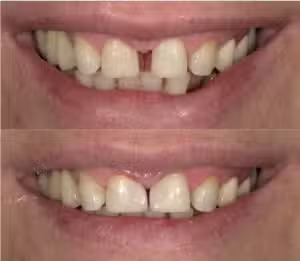
The Concern: A Noticeable Gap
From the moment she sat in the chair, we could tell this wasn’t just about teeth. It was about self-esteem. Our patient had a pronounced space between her two front teeth and was missing her upper lateral incisors — a fairly common condition that naturally causes more spacing.
While she’d considered options before, nothing had quite felt right. Orthodontics was on the table, but it would have meant over a year of treatment, more cost, and an uncertain esthetic result. She wasn’t looking for “perfect” — she was looking for something that felt like her, just better.
The Plan: Show First, Then Decide
This is where we took a different approach. Before asking her to commit to anything, we did a mockup — a 10-15 minute procedure where we used temporary material to simulate bonding directly in her mouth.
The moment she saw it, her face lit up.
“That’s exactly what I want.”
That clarity helped us design a conservative, cost-effective plan using composite bonding — a tooth-colored material that allows us to reshape and restore teeth with precision.
The Execution: Natural-Looking, Long-Lasting Bonding
She came back for a single one-hour appointment. No numbing. No drilling. Just skillful bonding to gently reshape and close the space between her front teeth.
An important design decision: we didn’t fully close the gap. During the mockup, we noticed that closing it entirely made her front teeth look too large and unnatural. Instead, we left a small, intentional space that maintained balance and harmony with her facial features.
Why Not Orthodontics?
In some cases, braces or clear aligners are the best option. But not always.
In her case:
- Time: Orthodontics would’ve taken a year or more.
- Cost: Bonding was significantly more affordable.
- Esthetics: Even with braces, she may still have needed bonding to shape the final result.
- Risk: Conservative bonding meant no permanent changes to her teeth structure.
The result? A natural, confident smile that felt like her, only better — and in a fraction of the time.
Her Reaction:
“I’ve been waiting 21 years to have this space closed.”
It’s moments like that that make our work so meaningful.
Lessons from This Smile Makeover
This case teaches us three important things:
- Listening Matters.
Every great result starts with understanding what the patient wants — not just clinically, but emotionally. - There’s Power in Mockups.
Being able to see the result in advance helps patients feel confident and involved in the decision. - Less Can Be More.
Conservative treatments like bonding can offer transformative results without invasive procedures.
Are You Ready for Your Smile Story?
Whether you’ve lived with a gap, a chipped tooth, or a smile that just doesn’t reflect who you are — we’d love to talk. At Cary Family Dental, we combine experience with compassion to create results that last and feel right for you.
👉 Click here to schedule a consultation or learn more.
Frequently Asked Questions (FAQs)
- What is dental bonding?
Dental bonding is a procedure where a tooth-colored resin is applied and shaped to improve the appearance or function of a tooth. - Is bonding a permanent solution?
Bonding is long-lasting, but not permanent. It may chip or wear over time and might need touch-ups every 5–10 years. - Does bonding require shots or drilling?
In many cases, no! Especially when used for cosmetic purposes, bonding can often be done without numbing or altering the tooth. - How long does a bonding appointment take?
Most cosmetic bonding appointments take 30–60 minutes, depending on the complexity and number of teeth. - Can bonding close gaps between teeth?
Yes, bonding is often used to close small-to-moderate gaps between teeth with natural-looking results. - How do I know if bonding is better than braces?
It depends on your case. If your concern is mostly esthetic and doesn’t involve bite or jaw issues, bonding may be a faster, simpler option. - What are the risks of bonding?
Bonding can chip or stain over time. Avoid biting on hard objects and maintain regular check-ups to keep it in great shape. - Does bonding look natural?
Absolutely — when done well, bonded teeth blend beautifully with your natural smile. - How much does bonding cost?
Costs vary by tooth and complexity, but it’s generally much more affordable than veneers or orthodontics. - Is there downtime after bonding?
Nope! You can eat and drink right after the procedure, although we recommend being gentle with your teeth for a few hours.
Contact Cary Family Dental:
919-371-4428
Location (Tap to open in Google Maps):
915 Kildaire Farm Rd
Cary, North Carolina
27511