There’s something powerful about watching a patient rediscover their smile. Not just the physical transformation, but the shift in confidence that comes with it. Today, I want to share a case that perfectly captures why I love what I do, and why the best solution isn’t always the obvious one.
When Old Dental Work Stops Working
Our patient, a vibrant 70-year-old woman, came to us with a problem many people face: dental work that had outlived its prime. Years ago, she’d had composite bonding placed on her upper front teeth to close natural gaps and create a more uniform smile. At the time, it was the perfect solution.
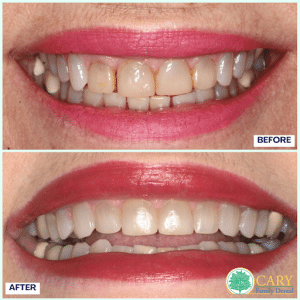
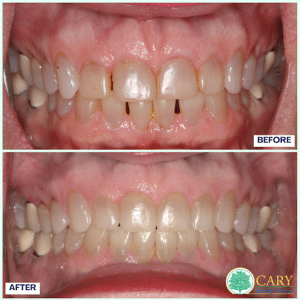
But composite bonding doesn’t last forever. After decades of wear, the material had discolored to a dull yellow, the edges had worn down, and what once made her smile brighter now made her self-conscious. She wasn’t smiling in photos. She held back in conversations. Her confidence had taken a real hit.
She walked into our office convinced she needed veneers. And honestly? Veneers would have worked. But I wanted to explore something different first.


The Consultation That Changed the Plan
Our goal is always the same: do what’s needed, not more. So before committing to veneers, we took our time. We talked about her goals. We examined her teeth carefully. And that’s when I noticed something important.
Her natural teeth underneath that old bonding were in excellent shape. The discoloration wasn’t her teeth; it was the aging composite material. The gaps weren’t caused by disease or structural problems; they were just her natural anatomy.
This opened up a question: why cover healthy teeth with veneers when we could reveal what was already there?
I explained that in cosmetic dentistry, you can only change three things about teeth: color, shape, and position. Veneers would change all three at once by adding new restorations. But what if we addressed each element individually using her own teeth?
The alternative plan: remove the old bonding, close the spaces with Invisalign, and brighten her natural teeth with professional whitening. It would preserve her tooth structure and give her that refreshed, natural look she wanted.
There was one catch. A big one.
The Uncomfortable Middle
Once we removed the bonding, those natural gaps would be visible again. For months. While her teeth gradually moved into position with Invisalign.
I laid this out clearly because I needed her to understand what she was signing up for. Living with visible gaps isn’t easy, especially when you’re already self-conscious about your smile.
She thought about it. Then she looked at me and said, “Let’s do it.”
That commitment made all the difference.
The Treatment Journey
Step One: Revealing What Was Hidden
We carefully removed all the old composite bonding, taking our time to preserve the healthy enamel underneath. As we worked, her natural teeth emerged, structurally sound and ready for the next phase.
The gaps were now visible. This was the hard part she’d prepared for.
Step Two: Planning with Precision
We used our iTero digital scanner to capture detailed 3D images of her teeth. Unlike traditional impressions that many patients dread, digital scanning is quick, comfortable, and incredibly accurate. No gagging. No mess. Just precision.
The scan went to Invisalign, where the software analyzed her tooth positions and created a customized treatment plan. We showed her a virtual preview of her final result, which helped her stay focused on where we were headed during the challenging middle phase.
The plan called for approximately eight months of clear aligner treatment.
Step Three: The Transformation Unfolds
For eight months, she wore her Invisalign aligners faithfully, 20-22 hours a day, changing to a new set every week or two. She came in regularly so we could monitor progress and make sure everything was tracking perfectly.
Invisalign requires real dedication, and she delivered. Her compliance was exceptional, which directly contributed to the success of her treatment.
The best part? The clear aligners were virtually invisible. At 70, she appreciated straightening her teeth without the aesthetic concerns that come with traditional braces.
Step Four: The Finishing Touch
Once her teeth were properly aligned and the spaces closed, we completed the transformation with professional whitening. Her natural teeth, now beautifully positioned, got the brightness boost that brought everything together.
The Result That Says It All
Total treatment time: eight to nine months. Multiple visits. One period of temporary aesthetic compromise.
Worth it? Absolutely.
When she saw her final result, her reaction told the whole story. She loved her new smile. The spaces were closed, her teeth were aligned, and the natural brightness gave her exactly the refreshed appearance she’d been dreaming of.
But here’s what really mattered: she told us that despite the time investment and the temporary gaps, she would do it all over again without hesitation.
That’s the kind of result that reminds me why I got into dentistry.
Why This Approach Won
Several factors made this case successful, and they offer valuable lessons for anyone considering cosmetic treatment.
We chose conservation over coverage. By working with her natural teeth rather than covering them, we preserved healthy structure. Veneers require removing a thin layer of enamel, which is irreversible. Our approach kept her natural teeth intact.
We planned comprehensively. Instead of addressing just one concern, we tackled color, shape, and position in a coordinated way. Each element supported the others.
She committed fully. None of this works without patient dedication. She wore her aligners consistently, attended every appointment, and maintained her positive attitude through the challenging phases. Learn more about what to expect with Invisalign treatment.
We communicated openly. From day one, we explored all options together. I didn’t just tell her what to do. I explained the why behind each recommendation and gave her the information she needed to make an informed choice.
What This Means for You
If you’re considering cosmetic dental treatment, here’s what you should know:
Don’t assume you know the only solution. This patient came in thinking veneers were her only path forward. By staying open to alternatives, she ended up with a treatment that better served her long-term health. Always explore your options thoroughly.
Quality takes time. In a culture obsessed with quick fixes, it’s tempting to want the fastest solution. But sometimes the approach that takes longer yields better, more lasting results. Patience pays off.
Old dental work doesn’t mean limited options. Many people live with aging restorations because they assume their choices are too invasive or too limited. Modern dentistry offers numerous ways to refresh your smile while preserving what’s healthy. Explore cosmetic bonding alternatives.
Age is just a number. At 70, this patient proved you’re never too old to improve your smile. Clear aligners like Invisalign make orthodontic treatment comfortable, discreet, and accessible for adults at any stage of life.
Natural results are absolutely achievable. Cosmetic dentistry doesn’t mean artificial-looking teeth. This case demonstrates that enhancement can look and feel authentic to you. The goal isn’t perfection. It’s confident, natural beauty.
Understanding Your Three Options
Remember, there are only three things you can change about your teeth: color, shape, and position. Understanding this framework helps clarify what you want to achieve.
Color can be addressed with professional whitening, bonding, or veneers, depending on whether discoloration is intrinsic or extrinsic. Our patient’s discoloration lived in the old bonding, not her natural teeth, so removing it and whitening solved the problem.
Shape can be altered with bonding, contouring, veneers, or crowns to correct chips, wear, or proportions. For our patient, removing the old bonding actually restored her natural tooth shape, which was quite attractive once revealed.
Position can be corrected through orthodontic treatment using traditional braces, clear braces, or aligners like Invisalign. Our patient’s primary concern was spacing, and addressing the position eliminated the need for restorations to mask the gaps.
When Veneers Are Still the Right Choice
Let me be clear: veneers are an excellent solution for many situations. They’re particularly valuable when teeth have significant intrinsic discoloration that whitening can’t fix, when multiple aesthetic concerns can be efficiently addressed in one treatment, when teeth need structural coverage for protection, or when someone wants faster transformation and understands the trade-offs.
The key is having a thorough consultation where all options are explored and the right treatment matches your specific needs, goals, and circumstances.
The Confidence Factor
One of the most beautiful aspects of this case was watching our patient’s confidence return. Even during the challenging period with visible gaps, she maintained a positive outlook because she could see where she was headed.
Cosmetic dental treatment isn’t just about changing teeth. It’s about restoring confidence, eliminating self-consciousness, and giving people freedom to express themselves fully.
Our patient hadn’t felt truly confident in her smile for years. The aging bonding made her hesitate in photos and social situations. Now, with her refreshed natural smile, she can express joy without holding back.
That transformation is what makes cases like this so rewarding.
Your Story Starts Here
Every patient who walks through our door has unique concerns, unique goals, and a unique story. What worked beautifully for this patient might not be the right solution for you. That’s why we never take a one-size-fits-all approach.
If you’re unhappy with your smile, whether from old dental work, spacing issues, discoloration, or anything else, I encourage you to schedule a consultation. We’ll explore what’s possible, discuss all available options, and create a treatment plan that aligns with your goals, timeline, and budget.
Sometimes the answer is veneers. Sometimes it’s a combination approach like this case. Sometimes it’s something entirely different. But you won’t know until we have that conversation.
What I can promise: we’ll listen to your concerns, thoroughly examine your oral health, explain your options clearly, and support you every step of the way.
Your smile is worth it. At any age, it’s never too late to achieve the confidence you deserve.
Common Questions About Smile Transformations
Here are the questions we hear most often about treatments like the one featured in this case study.
How long does composite bonding typically last?
Composite bonding usually lasts 5-10 years, depending on location, oral habits, diet, and hygiene. Front teeth bonding tends to last longer than back teeth. Over time, composite can stain, chip, or wear down, which is why periodic replacement is often needed. Regular checkups help us monitor the condition and catch issues early.
Can I get Invisalign at any age?
Absolutely. While many associate orthodontics with teenagers, Invisalign works for adults at virtually any age, as long as your teeth and gums are healthy. This case involved a 70-year-old who achieved excellent results. The key factors are good oral health, adequate bone support, and commitment to wearing aligners as prescribed.
Should I get veneers or Invisalign for spacing issues?
It depends on your situation and goals. Veneers close spaces quickly in just a few appointments and can change color and shape simultaneously. However, they require removing some tooth structure and are irreversible. Invisalign takes longer but preserves natural teeth by actually repositioning them rather than masking the problem. If your natural teeth are healthy and attractive once aligned, orthodontics may be the more conservative choice.
Will I have visible gaps between treatments?
In cases where old restorations need removal before orthodontic treatment, there may be a period with visible gaps. This temporary phase is necessary to expose natural teeth so they can move properly. While aesthetically challenging, it’s typically a worthwhile trade-off for patients committed to natural, long-lasting results. We discuss this possibility during planning so you can make an informed decision.
How does professional whitening compare to store-bought products?
Professional whitening uses higher concentrations of whitening agents customized to your needs, making it significantly more effective than over-the-counter products. Professional treatment works faster and more predictably, often with results visible after a single session. Your dentist can also protect your gums and address sensitivity. Store-bought products work for minor staining but require weeks of use and may produce uneven results.
What is an iTero digital scanner?
An iTero scanner captures detailed 3D images of your teeth using optical technology. Unlike traditional impressions with uncomfortable putty trays, digital scanning is quick, comfortable, and mess-free. The scanner moves around your mouth, capturing thousands of images compiled into a precise digital model. It’s more accurate than traditional impressions, provides instant results you can view on screen, and eliminates retakes if something goes wrong.
How much does a smile makeover cost?
Cost varies widely depending on procedures involved, case complexity, geographic location, and provider expertise. A combination treatment like the one in this case might range from several thousand dollars upward, depending on the orthodontic treatment length. During consultation, we provide detailed treatment plans with cost estimates for each phase. Many offices offer financing to make treatment accessible. Remember, investing in your smile is investing in your confidence and quality of life.
Does Invisalign hurt?
Most patients find Invisalign more comfortable than traditional braces, though it’s not entirely without discomfort. When starting a new set of aligners, you’ll feel pressure and mild soreness as teeth begin shifting. This typically fades within a day or two. Unlike braces, there are no brackets or wires to irritate your mouth. Some experience temporary sensitivity or slight speech changes initially, but these resolve quickly. Discomfort levels vary, but most find it very manageable.
What if I’m unhappy with old dental work, but my teeth are healthy?
This is common, and you have options. Schedule a consultation to discuss concerns and goals. We can assess your existing work and the health of natural teeth underneath. Depending on your situation, you might be a candidate for removing old restorations and pursuing more conservative treatments, as in this case. Or you might replace old work with updated restorations. Modern materials and techniques often provide more natural-looking, longer-lasting results. The key is professional evaluation to understand what’s possible.
How do I know if I need to replace my composite bonding?
Several signs indicate replacement time: visible discoloration or staining that doesn’t respond to cleaning, chips or cracks, rough edges, gaps forming between bonding and natural tooth, or changes in how bonding feels. If you’re simply unhappy with how it looks compared to your natural teeth, that’s a valid reason to explore replacement or alternatives. Regular dental checkups help catch these issues early, and we can advise on timing based on your bonding’s condition.
Contact Cary Family Dental:
919-371-4428
Location (Tap to open in Google Maps):
915 Kildaire Farm Rd
Cary, North Carolina
27511